25 Jul 2026
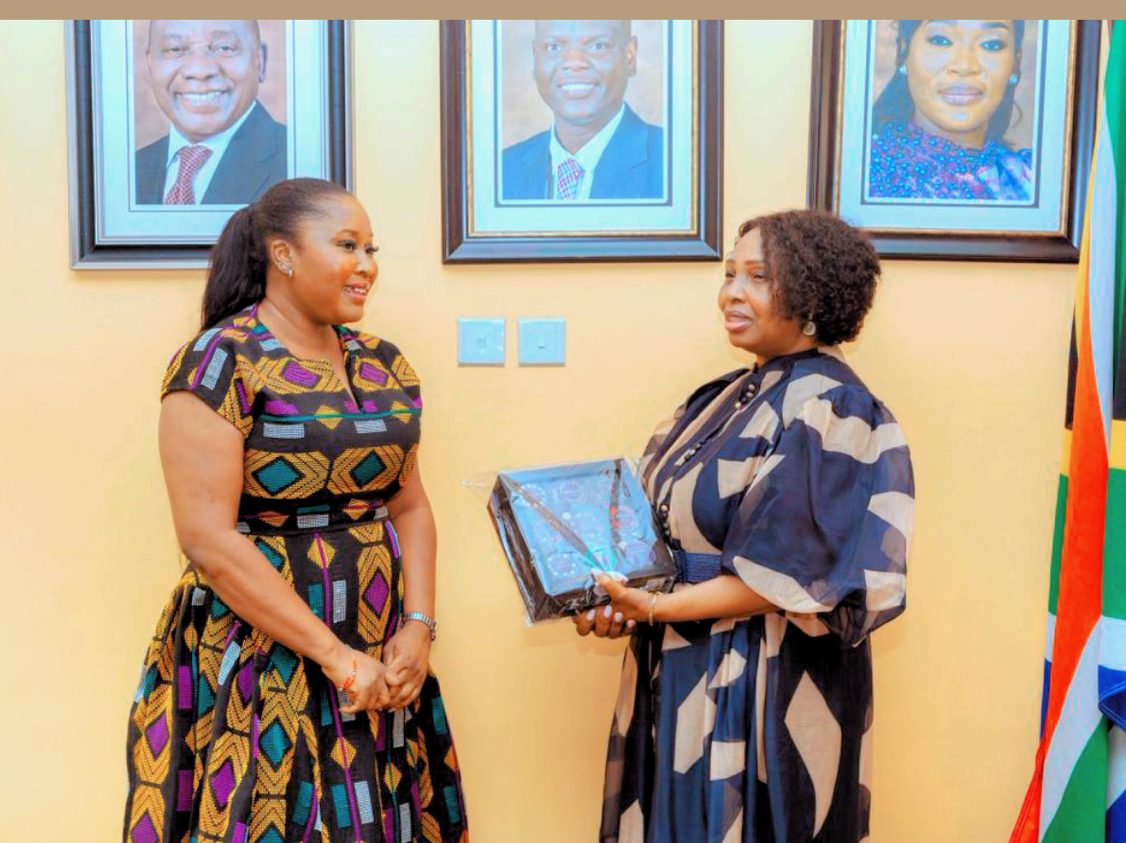
ABUJA, NIGERIA — Intra-African diplomacy and regional economic integration reached a significant milestone as the African Tourism Board (ATB) formally reinforced its strategic ties with the Republic of South Africa. This follows a high-level consultative engagement between the newly appointed Deputy Secretary General of the ATB, Amb. Adefunke Oni, and Her Excellency Lindi Mminele, Acting High Commissioner of the Republic of South Africa. The diplomatic exchange, hosted at the South African High Commission in Abuja, served as a critical precursor to the Deputy Secretary General’s upcoming official mission to South Africa for World Travel Market (WTM) Africa 2026, scheduled for April 13–15 in Cape Town. Amb. Adefunke Oni emphasized the imperative of fostering robust partnerships that position Africa as a unified, globally competitive tourism powerhouse. Central to these discussions was the unveiling of the ATB’s 2026 Strategic Vision, which seeks to transform the continent into a “Single Tourism Block.”
This vision prioritizes the harmonization of travel policies, the digitalization of the African tourism experience, and the promotion of sustainable community-based tourism that ensures economic dividends reach the grassroots level. By 2026, the ATB aims to facilitate a 15% increase in intra-African travel through targeted advocacy and bilateral cooperation. This mission comes at a transformative period for the continent; following a record-breaking 2025, Africa has emerged as the fastest-growing global region for tourism, recording an 8% increase in international arrivals to reach 81 million visitors. Amb. Oni articulated the ATB’s mission to drive high-impact investment and promote sustainable development, noting that tourism now accounts for approximately 41% of Africa’s service exports—the highest share of any region globally. Her Excellency Lindi Mminele reaffirmed South Africa’s steadfast commitment to supporting multilateral initiatives designed to catalyze growth. South Africa continues to be a cornerstone of this continental resurgence, having welcomed approximately 10.5 million international tourists in 2025.
The sector currently sustains 1.8 million direct and indirect jobs in the country—representing one job created for every 13 international arrivals—and contributes nearly 9% to South Africa’s national GDP. The high-level discussions focused on implementing mutually beneficial frameworks to elevate African destinations while mobilizing capital to strengthen the tourism ecosystem. Both parties coordinated participation in upcoming landmark events, including WTM Africa, which is expected to host over 6,000 industry professionals and exceed the record 38,559 business meetings facilitated in previous cycles. They also highlighted the Tourism Indaba (May 11–14) and the Africa Live Events Conference (ALEC) (May 23–25) as vital platforms for partnership development. This engagement marks a significant milestone in the diplomatic and tourism relations between Nigeria and South Africa, establishing a sophisticated roadmap for deeper cooperation. Both parties concluded the mission by recognizing tourism as a primary engine for economic growth, cultural exchange, and the realization of continental unity under the African Union’s Agenda 2063.
No comments yet — be the first to share your thoughts.
